Skip to content
A question I get asked fairly often is whether I see myself as a fishing guide or a conservationist.
The honest answer is that I’ve stopped trying to separate the two.
Because without conservation, there simply isn’t any fly fishing.
I’ve been fortunate enough to fish and guide in some extraordinary places across Africa. From the Seychelles to the Malagarasi River and now Nyerere, every destination has taught me the same lesson: healthy fisheries don’t happen by accident.
They’re protected.
Sometimes that’s through national parks and legislation. Sometimes it’s the work of anti-poaching teams spending months in the bush. Sometimes it’s local communities who understand the value of looking after the resource. More often than not, it’s all of those things working together.
As anglers, we only ever see the finished product.
We arrive to clear water, healthy fish and beautiful surroundings. It’s easy to forget how much work has gone into keeping it that way.
I don’t believe fly fishing is conservation simply because we release our fish. Catch and release is important, but it’s only one small piece of a much bigger picture.
Real conservation starts long before the first cast.
It starts with protecting habitat.
Keeping rivers flowing.
Supporting the people who live alongside these places.
Making sure wildlife has value while it’s alive.
Choosing operators who invest back into the fisheries they rely on.
For me, guiding has never just been about helping someone catch a tigerfish.
It’s about introducing people to places that still feel wild.
Because once you’ve watched elephants drinking from the river while you’re stripping a fly through a current seam, or listened to fish eagles calling across a quiet lake at sunrise, it’s very difficult not to care about protecting those places.
I think that’s one of fly fishing’s greatest strengths.
It slows us down.
It asks us to notice things.
The direction of the wind.
The insects.
The birds.
The colour of the water.
The health of the river.
Before long, you stop seeing a fishery as somewhere to catch fish. You start seeing it as an ecosystem, where every part matters.
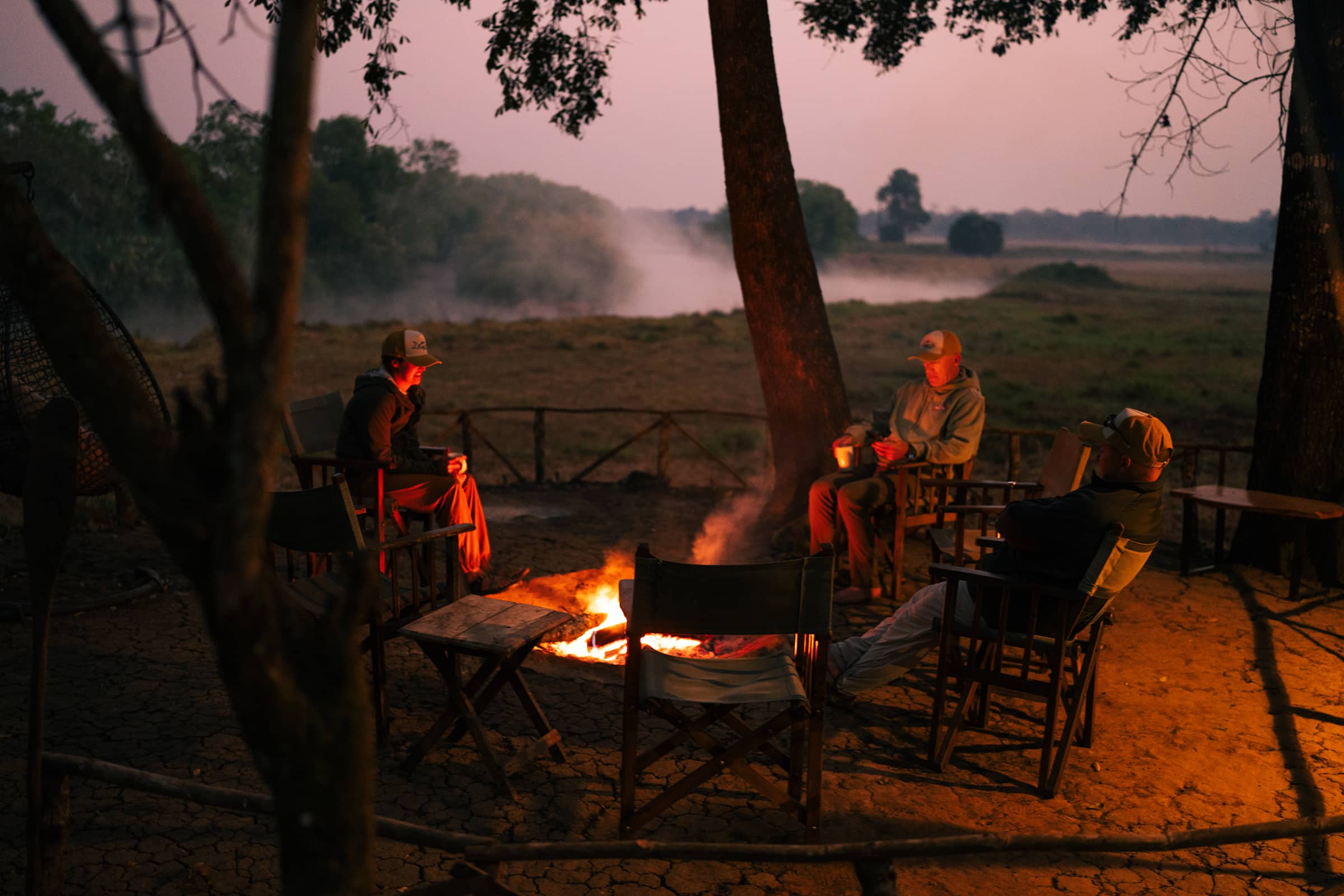
I’ve watched guests arrive focused entirely on the fishing, only to leave talking about hippos, kingfishers, camp staff, sunsets and conversations around the fire.
The fish were simply the reason we met.
The place became the memory.
At Firetail, we don’t claim to save Africa.
But we do believe that responsible tourism has an important role to play.
Every guest who joins us supports jobs in remote communities, contributes to the protection of remarkable landscapes and helps demonstrate that healthy fisheries are worth far more than exploited ones.
That’s something I’m incredibly proud of.
I hope that every person who fishes with us leaves with more than a few photographs and a sore stripping hand.
I hope they leave with a deeper appreciation for the rivers, lakes and wild places that made those moments possible.
Because in the end, conservation isn’t about protecting fish.
It’s about protecting the places that make us feel alive.
And I can’t think of a better reason to pick up a fly rod.